

I’ve decided tonight
I’m staying alive
Just kicking and screaming
After my twenty fourth birthday, I furiously wrote out a novel called To Live over the course of two weeks. These were days where I spent every waking moment that I wasn’t at work writing this novel. Some days, I wrote over ten thousand words, and at the end of this two week sprint, utterly exhausted and spent, I had an 80,000 word novel. Over the following week or two, I added another 20,000 words to it.
My fifth novel and, perhaps, the one deepest at the root of who I am. It was published as my second novel way back in 2014 and people could not have cared less about it.
It was a novel about staying alive. About not giving in, even when all you wanted was to die.
Several phrases chorused through the novel but an important one was kicking and screaming, this furious fight for life, to live.
To Live.
It’s a novel that has haunted me for these last twelve years. It was experimental and dense, linguistically confrontational. It was a novel written as a fistfight between me and the reader. And so perhaps it should have been no surprise that it failed utterly, but it remains one of my favorite things I’ve ever written.
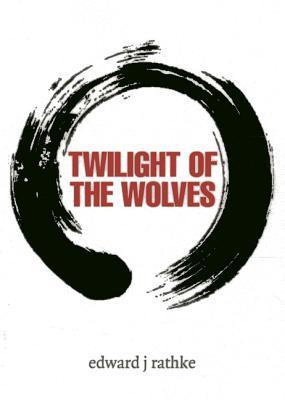
I put it out of print in 2016, I believe. Maybe 2018. Who remembers.
The name of the novel had to change when it was published by a midsized publisher in the UK and so it became Twilight of the Wolves, an evocative title that has always sat somewhat uneasily in my head.
Over the years, I’ve toyed with rewriting it. With cleaning up the language to make it easier to read, easier to follow, but one shower in the middle of last year unlocked it for me. What this meant, though, is that instead of a simple rewrite to make the novel more approachable, I needed to explode and reinvent the novel.
And so that’s what I began doing. I’ve been writing about the process at my other site. Over the course of a few months last year, I turned the first 4,000 words of that original novel into about 120,000 words. I suspect there are about 500,000 more words to write in the novel.
Though it is transforming from the bones outward, it remains a novel about staying alive. Choosing to live.
I was sixteen when I first heard Cursive’s The Ugly Organ. It did not become my favorite album on first listen. It barely even registered as I was the kind of sixteen year old—like so many are—who was obsessed with music, with finding new music, with swallowing whole albums and gluttonously demanding still more. But I was drawn to the fact that this was a concept album telling a complete story about characters. It played with fairytales, with love and longing, with loss and dying.
If such an album can be said to have a breakout hit, it was the song The Recluse. It, at least, had a music video.
This video and song were my introduction to Cursive.
Tim Kasher’s hushed vocals, the way jangling guitars play against a goddamn cello swirled within me and opened up something I’d never considered.
How many postrock/punk bands have a cello!
I was a classical music kid. This wasn’t something forced on me by my parents or adults, but it was one of the only things that helped me finally fall asleep every night. I’d turn on the classical music station on the radio and listen for hours until, at last, I was able to sleep. What I found there was the sound of my own heart.
Violins and cellos, piano keys.
And so for this reason, Cursive always stuck out to me, even if I didn’t often find myself putting their album on when I drove my car to school or work, when I took long walks or smoked cigarettes or lay in my bed and staring at the wall, the ceiling.
Every few months, I’d remember them, though, and while I mostly listened to The Recluse because of the way it so perfectly captured the kind of longing and lamenting that I sought, I’d also put on the whole album and listen from start to finish.
And while I’d like to go through the album song by song, moment by moment, lyric by lyric, that might get a bit out of hand. There are, though, a few things to know about the album, I think.
Tim Kasher doesn’t have a good voice, but his voice is perfect for the kind of music he makes and writes. His shouting, the caustic way he plays guitar, fighting against Gretta Cohn’s cello, but also the way his voice mellows.
There’s a lot of Built to Spill and The Pixies in Cursive. The elliptical song structures, the way he uses volume, but then there are also more classical structures from, well, classical music but also pop music.
A song like A Gentleman Caller begins like a postrock assault of distortion and Kasher’s acrimonious shouting, the accusation but also the longing.
Your gentleman caller
Well, he’s been calling on another
A story about telling a woman that her man is cheating on her leads to our narrator hopping into bed with her. The instruments distort and fight against one another leading to a haze of discordance, of static shivering up and down your spine.
You bad girl!
Does it feel good being bad?
And getting worse?
Doo-do doo-do
doo-do doo-do
Caustic, abrasive, full of accusations and anger, frustration. For we have all loved someone who didn’t love us back, who loved another who we thought was unworthy. It roils within us, souring every interaction, filling us with bile and words we hold back, keep inside to fester and flower into either sorrow or hatred.
Do you know the structure of emotion? Can you hear the aural shape of it?
When the violins and cellos arrive in a movie at the emotional apex, the sound design of the narrative is working on you. Sometimes you find yourself crying because of the song, the way the piano hits your eardrum, the way the violins saw through your heart. When synthesizers rise in a cyberpunk movie, causing every hair to stand on end as our protagonists rush into the sunlight or darkness, it is sound design holding your heart, creating the texture of emotions in your skin, vibrating down through your bones.
A Gentleman Caller is a perfect example of this. The song rips and roars and rushes through all the bad decisions that lead to a one night stand, to cheating on her boyfriend, but then, upon waking, her mind clear of the drugs and alcohol, she finds only the shape of what she’s done. The man beside her who is not her man. The narrator, too, finds what he has done, roiling in shame and embarrassment. His desire falling to pieces, no longer all he wanted or needed.
Distortion falls away and we’re left with the quiet of our actions.
After the sonic assault, the music falls away and we’re left only with the cello, Kasher’s voice dropping low and singing slow instead of yelling fast.
But in the morning
On the sober dawn of Sunday
You’re not sure what you have done
Who told you love was fleeting?
Sometimes men can be so misleading
to take what they need from you
Whatever you need to make you feel
like you’ve been the one behind the wheel
The sunrise is just over that hill
The worst is over
Whatever I said to make you think
that love’s the religion of the weak
This morning we love like weaklings
The worst is over
The cello leads us on joined by drums and bass and guitar and our narrator emptying out the song with doo-do doo-do doo-do doo-dos until even his voice gives out and we’re left with that caressing cello.
I’ve been thinking about this album again because I’ve been thinking about my old novel again, the one I’m rewriting. After dropping my kids off at daycare, I put on Staying Alive by Cursive again, hoping for a bit of nostalgia, to be reminded of who and what I once was, how a song became a sensation and I unfurled that sensation over four hundred pages fifteen years ago.
I’ve decided tonight
I’m staying alive
Just kicking and screaming
Art hits you differently when you’re young. It burns you. Shapes you. A song can consume you. A single line can take over your personality. A poem can break you. Seven words can make you fall in love. Hopeless and wholly. Ten words can turn you to dust, to nothing, to a memory.
It took three words to break me.
The song begins far away. Just touches of sliding guitar and the gentle thrum. Down the hall, barely heard, the guitars begin and seem to echo even as you’re hearing them for the first time. They don’t come closer until the cello arrives.
It wraps round you in a gentle, comforting embrace. Holds you close as the rest of the instruments step closer and closer, giving shape and texture to this auralscape while you bathe in cello.
And then Tim Kasher sings, gently, nearly two minutes into the song.
I’ve decided tonight I’m staying alive.
Six words hit me thunderously, but not when I first heard them at sixteen. I was, at the time, too in love with my sorrow, enamored with my own pain, torturing myself and believing in that torture, believing I needed to hurt, to writhe in anguish for my words to ever matter, to ever mean a thing.
I was too young to know.
They did not hit me at eighteen or twenty, but instead when I was twenty three, living on another continent after abandoning my previous life.
I’ve decided tonight I’m staying alive.
Six words to leave me breathless.
After a brief lifetime of longing for death, I was, at long last, old enough to hear these words. The soft, gentle caress of his voice, the thunderclap of life shaking me out of years of misery, of loneliness, of longing and hoping for death.
I had long known that death was a choice. One that I kept putting off. One that I hoped someone or something else would make for me.
When I was sixteen and I fell forty feet and only broke my collarbone, I didn’t feel hope or like I had been saved for some purpose but that death had not yet taken me in her gentle embrace. I was not dead, not because I chose to live, but because I had not yet taken that one step necessary to die.
But here, I was able to see and hear. Able to hear that life is a choice.
An affirmative choice rather than a listless stumbling ever forward of time. Rather than living, I often felt that I was simply not dying.
It can be odd, perhaps, to have known me at the time, to see all the many fun and wondrous things I was doing, to see the places I was going, the people I was meeting, the love I was spreading as far and as wide as I could. Wandering from country to country, smiling and laughing.
And inside, I was simply waiting to die.
My life was a slow process of not dying rather than living.
I’ve decided tonight I’m staying alive.
It hits me still. Hits me in the chest, seizing my lungs.
Because I remember. I remember him.
I look back at the me that was fifteen years ago, at the one terrified of life, longing deathly, and I see how that may have been the moment he decided to start living.
It was not a singular moment. Not really. But rather an accumulation of moments over many months.
Just kicking and screaming.
He sings this so gently yet I felt it in new ways. Felt that life did not have to be this accidental process but one that I could choose with everything in me, that I could fight for.
That life was worth having. Worth living.
Perhaps not my life as I was living it, but a life.
A life that could become mine.
If I wanted love, which I was so desperate for, I could have it. But only if I fought for it. If I fought for life. If I fought to stay alive.
If I uncurled my back and raised my chin to the skies and opened my mouth and emptied my lungs in a howl that would lead me ever onward.
Alive
I’m staying alive
Blood boiling and streaming
There’s almost bemusement when he sings these words, like he’s as surprised as anyone to be alive, to choose life, and though he sings calmly, quietly, his blood boils within him, streams from him.
This album about pain and loss is also one about overcoming your own pain, about seeing past it, about moving past it rather than dwelling on it, becoming obsessed with your own misery. It is a denial that pain is required for art, that in order to make great art you must suffer great tragedy.
Those things can go hand in hand and often do, but we can also simply embrace our pain, consume it, accept it, and carry on with the act of living, of creating, of healing ourselves.
There are things
far too dark to comprehend
Sleep on it one more night
One more night
My sad old friend
Here the cello takes a front seat and begins driving the melody. We hear it in Kasher’s voice, the languid way he sings these lines.
A head full of suicide, full of death and sorrow, but what of it.
Sleep on it.
One more night.
Give life one more night.
At the same time, the guitars and distortion begin rising once more to swallow the cello and even his voice. My hair stood on end. It does still. This sound rolls through me, roils within me, lightning against my skin.
One more night.
One more night.
The sonic disruption drowning out the sleep, the last night, the softness of the cello and even the softness of his voice.
And so he must shout. He must fight.
My sad old friend is shouted into the distortion, into the vast sonicscape created around this moment. The drums begin driving us forward, reaching higher and higher while also digging deeper and deeper into us.
My misery, that old familiar friend, the one who had become a comfort to me. Sorrow as a blanket to wrap round your life, to explain your own life to yourself.
Here, we are breaking out of it.
Alive
I’m staying alive
Driving home after dropping my kids off at daycare, putting the song on to remind myself of who I was when I first wrote this long ago novel, this screaming forth of life hit me so terribly hard that a shudder ran through me and tears sprang to my eyes.
I’m staying alive
I’m staying alive
I’m staying alive
For all that I am no longer the boy and the man I was, they still live within me and echoes of their lives yet ripple through my skin, through the tempo of my heart, and I was cast back through time while I slowed to stops and drove on, while I was so very much myself at thirty eight in the life I never dreamt was possible.
And the tears came forth, running down my cheeks as I subvocalized the lyrics that were so deeply in me that it didn’t matter that it had been fifteen years.
Alive
I’m staying alive
Kicking and Screaming
Blood boiling and streaming
Staying alive
The guitars speeding up, fighting, thrashing, raging over my skin, digging their teeth into my sinew, into my joints, into my bones, into my own boiling blood streaming through me, screaming through me.
Tears not for myself or for who I once was but rather for both, for all of it at once, for all the mes trapped inside my head, for all the echoes of me still in my blood and bones, down to the root of who I am, to the bedrock of my life, of my heart, of all that I am.
Blood and bone, root and stone.
My life crashing like a wave down upon me, like the waves that nearly drowned me when I was thirteen, like the forty foot freefall from that cliffside to the stones below that should have killed me when I was sixteen, like all the times I sought meaning in drugs, in drinking, in casually falling in love, in throwing my heart away, like all the mes waking up in unfamiliar places without knowing how I got there but dreaming always of something more, of death and dying, of giving up and giving in, and all of these swirled within me and smashed into one another at those three simple words that sent me writing 100,000 words about staying alive.
I’m staying alive.
And the next three that showed me how.
Kicking and screaming.
And then the music carries on, faster and harder, reckless and violent, thrashing and crashing, distortion thrumming through me for two solid minutes and still onward as that distant choir begins singing.
Doo-do doo-do
doo-do doo-do
The worst is over
The worst is over.
I feel it in my bones. Feel it like shrapnel stuck in my skull. Like slivers of light piercing through my eyes on mornings when I wake up and see the curve of you, hear our daughter cooing or calling for me, hear the boys already awake and playing or fighting or calling for me.
And gradually, that distant choir comes closer and closer. Inch by inch, chord by chord.
The worst is over.
I feel it so acutely.
The worst is over.
I have been depressed probably my whole life. From my earliest memories, I felt a weight of sorrow on me. Sometimes this weight became suffocating and I would have done anything to make it stop, except for the singular act that would have ended it. Ended everything.
A life of depression. It ebbs and flows but always returns. There have been times it was so bad that I didn’t sleep for days, where I hallucinated, where I stopped eating, where I simply could not eat food. where I wandered through months like a wraith, where I spent days staring at the walls, lying in bed, barely able to function.
I never went to therapy. Probably should have, but never did.
Instead art became therapy to me. Not making it, no. Some may say that creating art is a form of therapy, but I have never felt that way. Rather, consuming art was my lifelong therapy. It’s why this newsletter exists at all, in truth. The art that has shaped me, that has given me this life, is everything to me. The reason I’m alive.
My hope and the only rubric for success in this endeavor is in sharing this with all of you. Hopefully, you have felt this way too. And if you haven’t, perhaps I can show you how. Show you how a life is made of movies, of music, of books and games, how three words can shatter, can rebuild, how a single painting can invent a year, how a song can shape a decade, how a movie can teach you how to live, how to survive, how to heal.
I have always been depressed and likely always will be, but I no longer want to die.
No longer hunger for death.
For the first time, I fear death.
And it is good. It is so vibrantly and spectacularly good to cling to life, to want to see the next week, the next year, to long for the future, to expectantly wait for my children to grow up, to grow old beside my wife.
There is a light.
It is all around us.
There is a fire.
Burning inside us.
The last two years have been some of the worst in my life. The long process of my father dying, the deaths of my friends, combined with various other things I cannot and will not share have turned the last few years into some of the hardest I have ever experienced.
But I can say without a doubt that the worst is over.
At least for me.
Tomorrows will come to crush me, to try to squeeze the life and hope from me, but still the worst is over, at least for me.
And I feel it so powerfully, swelling within me, as that choir inches still closer until it crowds out the distortion, the guitars, and even the drums until only the voices and the cello and the reverb remain.
The worst is over
The worst is over
And then even the choir fades away, sliding out of consciousness, into reverie, leaving us with only the tingling sensation of fingertipped guitar strings, of gentle cello, and I feel my lungs exhale a lifetime of pain and sorrow and death.
Feel instead the warm light of the choir, of my wife, of my children, of this life we made, of the future unfurling before us, and I feel such immense gratitude.
I close my eyes and kneel down and raise my face to the sun so thankful that I am still alive.
That I chose to stay alive.
Alive.
I’m staying alive.
Great stuff here. I came to this album later in life and it still hit, but more in a looking-back sort of way. Yet another instance of me discovering a work of art well after the window where it could've been more impactful and possibly improved my situation and outlook. Many such cases!
I subscribe to lots of substacks, but every personal essay from you is a must read, even at midnight when I should be asleep.
Also, looking forward to Beetle Battle!